Tools
Media Gridz vs Nonli: Which Social Publishing Tool Fits Your Newsroom?
Media Gridz automates RSS-to-social publishing with branded per-channel templates, automatic UTM tracking, an emergency keyword override, and MCP integration for AI platforms; self-serve pricing starts around €50/month. Nonli is an enterprise-priced social media management platform for publishers, focused on content scheduling, competitor and on-site social listening, analytics dashboards, and AI-powered image cropping via Fontan.io, with custom pricing requiring a demo call. Choose Media Gridz for automated article-to-post distribution; choose Nonli for competitive and on-site engagement intelligence layered on manual or semi-manual publishing.

Media Gridz automates the article-to-post pipeline: RSS or URL in, branded per-channel image posts out, across Facebook, Instagram, LinkedIn, Bluesky, Pinterest, X and Mastodon
Nonli centers on planning, competitor and on-site listening, and analytics for content a team schedules manually or semi-manually.
Media Gridz includes automatic UTM tracking, an emergency keyword override for breaking news, and MCP integration for AI platforms.
Nonli includes social listening, an on-site engagement SDK, AI-powered image cropping (Fontan.io), and sub-15-minute support response times.
Media Gridz offers self-serve pricing from around €50 a month; Nonli's pricing is custom, enterprise-only and requires a demo call.
The better fit depends on the bottleneck: distribution automation points to Media Gridz, competitive and on-site intelligence points to Nonli.
Newsrooms and publisher groups have more social channels to feed than ever, and less time to do it manually. Two tools built with media companies in mind are Media Gridz and Nonli. Both promise to take work off editorial and social teams, but they solve fairly different parts of the problem. This guide breaks down where each platform is strongest, so you can match the tool to what your team actually needs.
What Media Gridz does
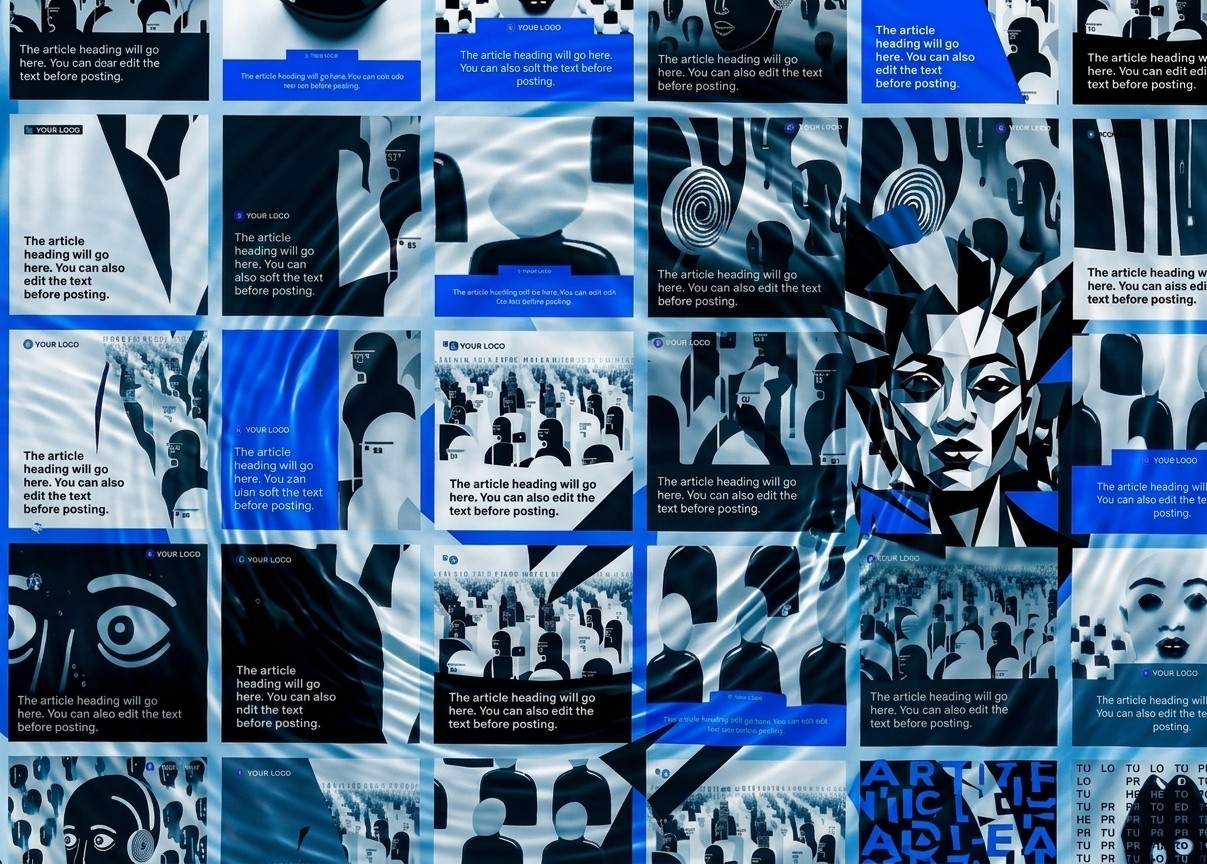
Media Gridz automates the path from content to published post. You connect an RSS feed, or drop in a URL manually, and the platform turns that article into a branded, on-image post for Facebook, Instagram, LinkedIn, Bluesky, Pinterest and X. Each channel gets its own template, so a post doesn't just get resized, it gets designed for where it's going.
A few things stand out in day-to-day use:
Multi-feed routing. Publishers running several sites or categories can route different RSS feeds to different channels and templates, which matters for newsrooms with more than one brand or vertical.
Emergency keyword override. Breaking news can jump the queue automatically when a post matches a defined keyword, instead of waiting for its scheduled slot.
Automatic UTM tracking. Every published link carries source, medium and campaign parameters by default, so traffic from each post is traceable in Google Analytics without manual tagging.
Insights suite. Channel comparison, post performance, click heatmaps, reader geography, time recommendations and headline pattern data are all built in, aimed at helping editorial teams see what formats and headlines actually drive clicks.
MCP integration. Claude, ChatGPT and Gemini can push content directly into Media Gridz, which is a distribution angle few competitors currently offer.
Self-serve pricing. Plans start around €30 a month for three channels, with no sales call required for smaller sites. Larger publisher groups move to per-site pricing with a sales-assisted setup.
The core idea is distribution automation: get articles out the door, formatted well, without a person touching each platform.
What Nonli does
Nonli is a social media management platform built for publishers, but its center of gravity is different. Rather than starting from an RSS feed and generating posts, Nonli focuses on planning, monitoring and analyzing what a team is already publishing.
Its main modules:
Smart planning. A visual, drag-and-drop content calendar with intelligent scheduling suggestions and recurring post templates, similar in spirit to tools like Buffer or Hootsuite but tuned for optimal posting times per network.
Social listening. Competitor monitoring, trending content identification and benchmarking against other pages in the same industry, with real-time alerts when something goes viral in a publisher's niche.
Organic listening. A consent-exempt SDK tracks real-time engagement on a publisher's own website, flagging emerging or underperforming articles.
Advanced statistics. Customizable dashboards, exportable reports and granular filtering by date, network, content type and author, plus ROI attribution for social campaigns.
Fontan.io. AI-powered image cropping that detects focal points and reformats visuals automatically for stories, posts and covers.
Dedicated support. Nonli advertises an average response time under 15 minutes, with direct team channels and regular strategy sessions.
Pricing is enterprise-only. There's no published self-serve tier. Instead, cost is scoped around page views analyzed in real time (for media companies) or total social audience (for other organizations), plus the number of accounts and integrations involved. Getting a price means booking a call.
Where the two platforms diverge
The clearest difference is what triggers a post. Media Gridz starts from the article itself: RSS in, branded post out, largely without manual intervention. Nonli's smart planning module schedules and manages content a team has already prepared, and its strength is layered on top of that, in listening and analytics rather than in generating the post.
That makes the two tools better suited to different problems. A newsroom whose main pain point is "we can't keep up with reformatting every article for six platforms" is closer to what Media Gridz is built to solve. A publisher whose main pain point is "we don't know what our competitors are posting" is closer to what Nonli's social listening is built to solve. Both platforms surface which of a publisher's own articles are over- or underperforming, just from different data: Media Gridz's Insights suite works from post and click performance, while Nonli's Organic Listening SDK works from real-time on-site engagement. Some teams genuinely need both problems solved, and in that case the two platforms aren't strictly interchangeable.
Access is another real difference. Media Gridz is self-serve at the lower end, so a single-site newsroom or independent blogger can sign up and start publishing without a sales conversation. Nonli's pricing is entirely custom and requires a demo call regardless of size, which fits larger media groups with dedicated procurement processes better than it fits a small team that wants to start today.
On analytics, both platforms take reporting seriously, but from different angles. Media Gridz's Insights suite is built around what happens after a post goes out, tracking clicks, headline patterns and reader geography tied back to UTM data. Nonli's Advanced Statistics and Organic Listening modules add a layer Media Gridz doesn't currently offer: competitor benchmarking and on-site engagement tracking via SDK, which is closer to social intelligence than post-performance reporting.
Image handling is a shared priority, tackled differently. Media Gridz applies per-channel branded templates at the point of publishing, so the same article produces a differently designed image for Instagram versus LinkedIn versus Pinterest. Nonli's Fontan.io focuses on automatic cropping and focal-point detection for images already prepared, optimizing framing rather than generating the branded design itself.
Honest limitations to weigh
Neither platform is a complete answer to every part of a social workflow. Media Gridz does not currently offer competitor monitoring or on-site engagement tracking, so a team that wants social listening alongside distribution would need to pair it with another tool. Nonli's feature set does not describe RSS-based automated post generation with per-channel branded templates, so a newsroom hoping to eliminate manual formatting entirely may find its calendar and listening tools solve a different problem than the one they started with. Pricing transparency also cuts one way: Media Gridz publishes a starting price, Nonli does not.
At a glance
Media Gridz | Nonli | |
|---|---|---|
Core function | RSS/URL-to-post automation | Social scheduling, listening & analytics |
Post generation | Automatic, from RSS or manual URL | Manual/semi-manual, via content calendar |
Channels | Facebook, Instagram, LinkedIn, Bluesky, Pinterest, X | 8+ networks (see current docs for full list) |
Branded per-channel templates | Yes, applied at publishing | Not a listed feature; Fontan.io handles crop/focal point |
Breaking news override | Emergency keyword queue jump | Not a listed feature |
UTM tracking | Automatic on every published link | Not a listed feature |
Own-article performance tracking | Insights suite (post & click performance) | Organic Listening SDK (real-time on-site engagement) |
Competitor monitoring | Not a listed feature | Social listening module |
AI image optimization | Branded templates per channel | Fontan.io auto-cropping |
AI platform integration | MCP server (Claude, ChatGPT, Gemini) | Not a listed feature |
Support response time | Not published | Under 15 minutes (business hours) |
Pricing | Self-serve from ~€50/month; per-site pricing for publisher groups | Custom enterprise quote only, via demo call |
Sign-up | Self-serve, no sales call for smaller accounts | Sales call required for all accounts |
FAQ
Does Nonli generate social posts automatically from an RSS feed? Nonli's published features center on scheduling, listening and analytics for content a team plans and publishes, rather than automatically generating branded posts from an RSS feed the way Media Gridz does.
Can I try either platform without talking to sales? Media Gridz offers self-serve sign-up for smaller accounts. Nonli's pricing is entirely custom, so getting access starts with a demo call regardless of team size.
Which tool is better for tracking competitors? Nonli's social listening module is built specifically for competitor monitoring and industry benchmarking, a feature Media Gridz does not currently offer.
Which tool is better for breaking news? Media Gridz's emergency keyword override lets urgent content jump the publishing queue automatically, which is aimed directly at breaking-news workflows.
Do both platforms support the same social channels? Media Gridz publishes to Facebook, Instagram, LinkedIn, Bluesky, Pinterest and X. Nonli states coverage of 8+ networks; check its current documentation for the exact list if a specific platform is a requirement.
Ready to automate your distribution instead of reformatting every article by hand? Start with Media Gridz.